AI, Power, and the Next Phase of EU–US Science Diplomacy
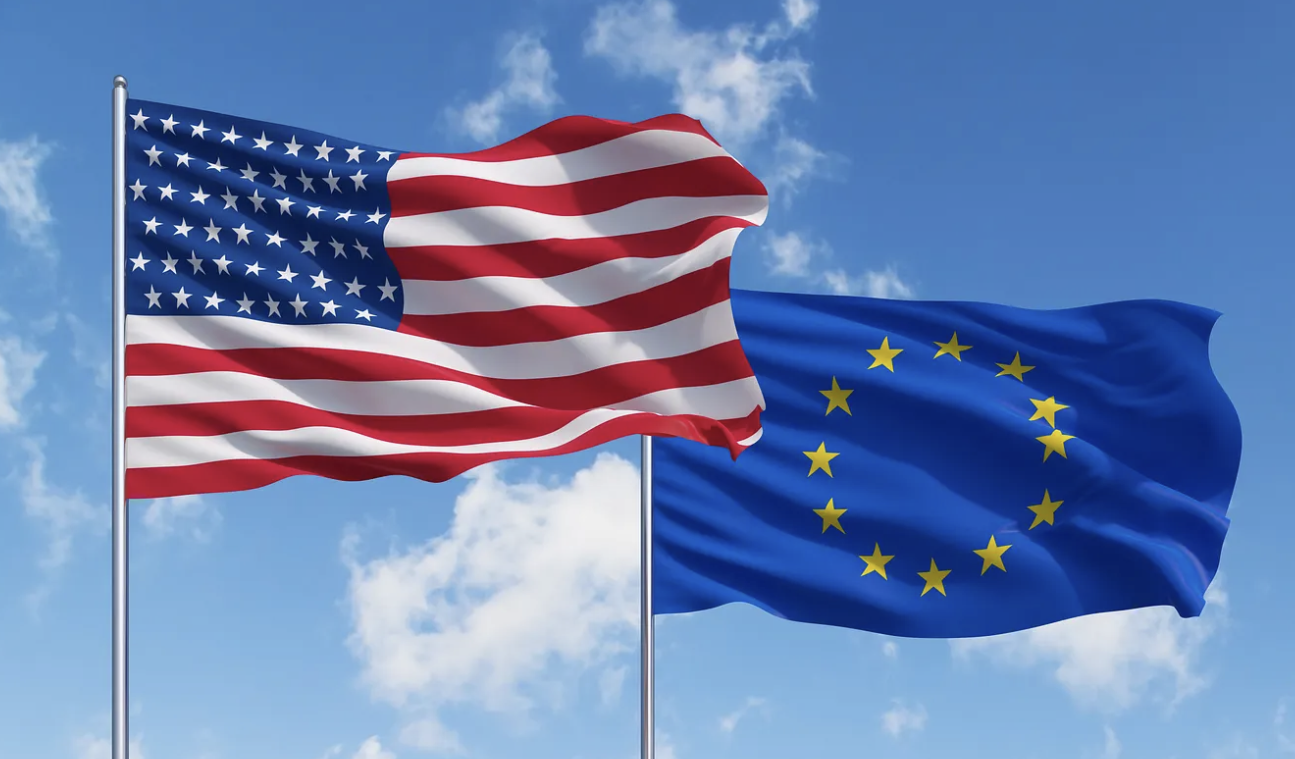
The United States just sent a signal Europe should treat as a strategic opening, not a footnote.
The United States just sent a signal Europe should treat as a strategic opening, not a footnote.
With the release of the 2025 National Security Strategy, the United States has consolidated AI policy into a national competitiveness and security framework, positioning frontier technologies as instruments of statecraft.
At the same time, the European Union is advancing a science diplomacy architecture built on principles, governance, and institutional capacity, as outlined in the European Framework for Science Diplomacy published this year.
These two moves can either collide or align. The next phase of EU–US cooperation will be decided by whether both sides choose interoperability over parallel tracks.
In my recent writing, I have argued that US strategy now treats AI and emerging technologies as core national interests, with standards functioning as tools to shape global norms. The National Security Strategy makes this explicit: AI leadership is tied to deterrence, economic security, alliances, and the export of trusted technology ecosystems.
The European Union is moving in a complementary direction, but with a values-first emphasis rooted in its own policy framework. That framework focuses on making foreign policy more effective through scientific evidence and foresight, strengthening science and technology capacity in diplomatic representations, and balancing openness with research security without abandoning open science.
Put those together, and a clear opportunity emerges.
The EU–US relationship is already strong. Horizon Europe partnerships, the Trade and Technology Council (TTC), and long-standing commitments to academic freedom provide a deep foundation.
But AI changes the operating system. AI forces decisions on model evaluation, compute governance, data flows, safety metrics, and dual-use risk. These are no longer technical details. They are the architecture of influence.
The European framework recognizes this tension directly. Research security provides guardrails. Science diplomacy enables proactive engagement.
The near-term strategic move is clear: build shared “how” alongside shared “why,” leveraging initiatives like Europe’s RAISE pilot, a €107 million virtual institute pooling compute, data, and talent for AI-driven science, in alignment with US programs focused on innovation, industrial leadership, and trusted exports.
Where the EU and US Can Win Together
Shared Evaluation and Assurance Infrastructure
The EU prioritizes governance that is enforceable and auditable. The United States prioritizes scale without sacrificing trust. The opportunity is to co-design evaluation methods that travel across jurisdictions: model audits, benchmarks, incident reporting, and verification for high-risk use cases. This is where standards stop being abstract and become strategic assets, building on the TTC’s joint AI roadmap.
Joint Foresight as a Diplomatic Capability
The EU explicitly calls for science-for-policy and foresight ecosystems to strengthen foreign and security decision-making. The US strategy links AI to energy leadership, supply chains, and national resilience. A transatlantic AI foresight cell could align horizon scanning, map critical dependencies, and anticipate where regulation and innovation will collide, rather than react after the fact.
Aligned Research Security, Not Fragmented Controls
Both sides are tightening guardrails. Without coordination, researchers and companies face misaligned compliance burdens that slow legitimate collaboration while failing to deter real threats. A shared risk vocabulary and playbook for trusted ecosystems would protect science without undermining it, echoing priorities already present in EU–US dialogues.
What Europeans Will Worry About and What the US Should Understand
The EU’s lens starts with legitimacy, meaning rules that are legally grounded and enforceable. Governance must be durable and rights-aligned. The European framework explicitly warns against approaches perceived as dominant or exclusionary.
If US AI policy is framed as “access depends on alignment,” even close partners may resist. This is not ideological opposition. It reflects institutional reality.
A structural difference remains. US power flows through scale, platforms, and procurement. Europe’s power flows through regulatory architecture, rights protection, and coordination. Science diplomacy is the mechanism that translates between the two.
What to Build Next
- An EU–US AI Science Diplomacy Compact for Measurement and Verification A standing mechanism bringing together regulators, national labs, standards bodies, and research institutions to define shared evaluation protocols for high-impact AI systems, tied to the EU AI Act and US trusted export frameworks for practical interoperability.
- A Transatlantic Research Security Impact Group A joint body to assess the real-world effects of restrictions, balancing security with open science through evidence-based analysis of risks and safeguards.
- Coordinated Science and Technology Capacity Embedded in Diplomatic Missions Stronger science and technology roles in delegations and embassies, supported by shared talent exchanges and joint training that align European priorities with US tech diplomacy footprints.
- A Trusted Talent Mobility Framework for Sensitive AI Domains Predictable pathways for researchers, with clear integrity standards to win the talent race without creating security blind spots, supporting initiatives like RAISE’s excellence networks.
These are not symbolic initiatives. They are operating infrastructure for the next decade.
Bottom Line
AI regulation is not just domestic governance. It is alliance architecture.
Europe has an institutionally serious blueprint for science diplomacy. The United States is consolidating AI as national capability.
The optimal outcome is not ideological convergence, but practical interoperability.
That is the strategic opening.
This analysis is part of my ongoing work on AI, science diplomacy, and global power dynamics. Additional briefings are available to Global Signals subscribers.
Global Signals
Global Signals connects science, diplomacy, and markets, highlighting emerging innovations that shape international partnerships. Published every two weeks, it brings forward-looking intelligence to policymakers, investors, industry leaders, and educators before these trends reach the mainstream. Sign up here
🎧 Podcast: Don’t miss The Global Lens, Science Diplomacy in Focus, featuring global leaders at the intersection of science, diplomacy, and innovation.
Subscribe: Spotify | Apple | More platforms