Orbit as Infrastructure of Power
How Space Is Becoming the Architecture of Global Influence
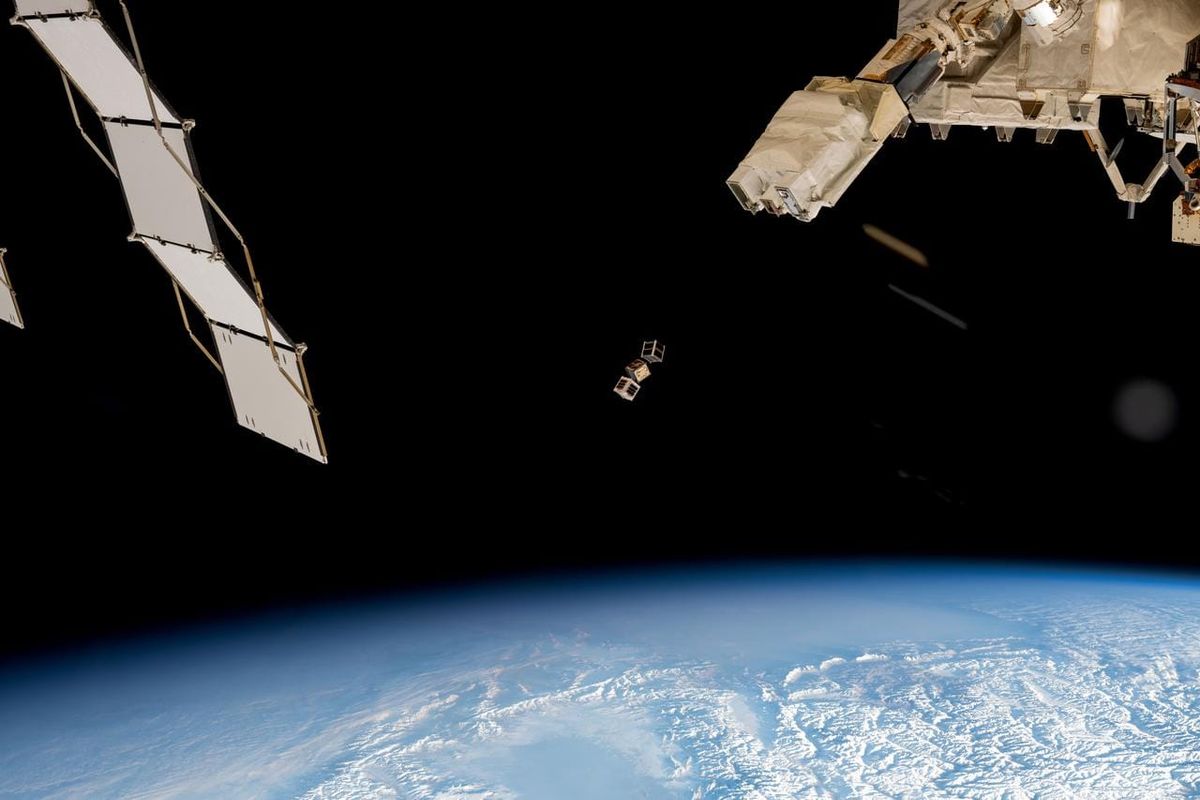
The Quiet Contest to Write Space's Operating Rules
This month, the United States issued a new Executive Order on space that reframed space superiority as a measure of national vision, economic strength, and security power, then translated that framing into concrete market design, industrial coordination, and allied alignment.
Viewed alongside the 2025 National Security Strategy, the signal is unmistakable. The United States is now treating technology leadership, standards, and industrial capacity as core national interests. Artificial intelligence, biotechnology, and quantum systems are explicitly named as arenas where American standards should drive global progress.
This is not simply about returning to the Moon.
It is about who defines the gateways, architectures, and rulebooks from low Earth orbit through cislunar space.
Space has crossed a threshold. It is no longer primarily an exploration domain. It is now an infrastructure domain. Infrastructure determines access, reliability, and advantage.
The Technologies That Now Define Power
The systems reshaping orbit are not symbolic or aspirational. They are foundational.
They govern positioning and timing that synchronize financial markets, logistics networks, energy grids, and communications. They coordinate traffic in increasingly crowded orbital lanes. They set debris mitigation rules that determine whether future scientific, commercial, and security activity remains possible. They define spectrum frameworks that decide which networks can operate globally and under what conditions.
These are not supporting systems. They are control systems.They now function in practice like the trade routes, ports, and clearinghouses of earlier centuries. They determine access, stability, and advantage.
From Exploration to Architecture
Space policy for most of the last three decades was framed around missions, science goals, and national prestige. What has now emerged is something structurally different.
Building on but decisively accelerating elements from prior eras, the United States is treating space as a unified governance and infrastructure domain where commercial velocity, allied interoperability, nuclear enablement, and AI convergence are orchestrated toward long term advantage. This marks the transition from space programs to space industrial statecraft. Standards are no longer technical afterthoughts. They are diplomatic instruments.
Standards as Diplomacy
Standards battles are already underway in low Earth orbit. Spectrum allocation, space traffic management norms, debris mitigation expectations, and licensing regimes are actively shaping who can operate and scale.
In cislunar space, new contests are emerging around positioning and timing baselines, lunar surface protocols, orbital transparency, and traffic coordination frameworks.
The United States push to lead in these domains is not neutral. It is designed to make American architectures the default for interoperability, creating structural path dependency for allies, partners, and commercial actors. Interoperability is becoming alignment. Alignment is becoming access.
Diplomacy is no longer limited to treaties and dialogues. It is now embedded in operating rules.
Commercial Diplomacy in Orbit
This shift is already visible in how commercial platforms are being used as instruments of diplomacy.
Axiom Space does not operate simply as a private company. It functions as an intermediary architecture between governments, universities, industry, and sovereign research ecosystems. By building the first commercial space station and structuring access through international partnerships, Axiom is creating a new diplomatic layer in low Earth orbit.
Its Global University Alliance, private astronaut missions, and bilateral government partnerships expand access to microgravity research and human spaceflight for nations that were previously excluded from orbital participation. Recent missions bringing astronauts from India, Poland, and Hungary back to the International Space Station after decades illustrate how commercial platforms are now restoring and extending sovereign scientific presence in orbit. This is not privatization of space. It is the emergence of platform diplomacy.
Orbital infrastructure is becoming a venue where governments pursue national capability, workforce development, and scientific influence through commercial systems governed by shared standards, licensing frameworks, and interoperable operating rules. Diplomacy is moving into infrastructure.
AI as the Invisible Driver
Artificial intelligence is accelerating this transformation not as a headline technology, but as a forcing function across national systems.
The emerging United States AI Action Plan, including trusted export frameworks and aligned compute and energy ecosystems being built with partners, depends on space for secure communications, sovereign timing, persistent sensing, and continuity under disruption.
Autonomous systems require trusted orbital environments to operate safely at scale. Without resilient positioning, navigation, timing, and traffic coordination, AI cannot coordinate across national, allied, and industrial systems.
Space has become the physical anchor of the national AI strategy.
Not because intelligence lives in orbit, but because orbit enables global autonomy, verification, and continuity under stress.
Space is the infrastructure layer that allows intelligence to move, synchronize, and act across planetary systems.
Why This Is a Structural Shift
The decisive change is not simply more launches, more satellites, or more exploration milestones. It is that access, alignment, standards, and infrastructure are now being treated as instruments of national power.
The rules that define orbit are becoming the rules that define markets, research ecosystems, and allied networks.
Space has become the connective tissue between national security, industrial competitiveness, scientific leadership, and diplomatic influence.
The New Strategic Reality
The future will be shaped not only by who reaches orbit, but by who writes and can enforce the rules that make orbit usable, reliable, and sovereign for everyone else.
Space is no longer where power is demonstrated.
It is where power is quietly built.
More analysis on science diplomacy and strategic infrastructure is available at glsd.ai, where ongoing work connects policy, innovation, and international partnerships through a global lens.
New Resource: The Science Diplomacy Playbook
For readers working across diplomacy, technology policy, research strategy, investment, or international partnerships, The Science Diplomacy Playbook: 2026 Edition is now available to order.
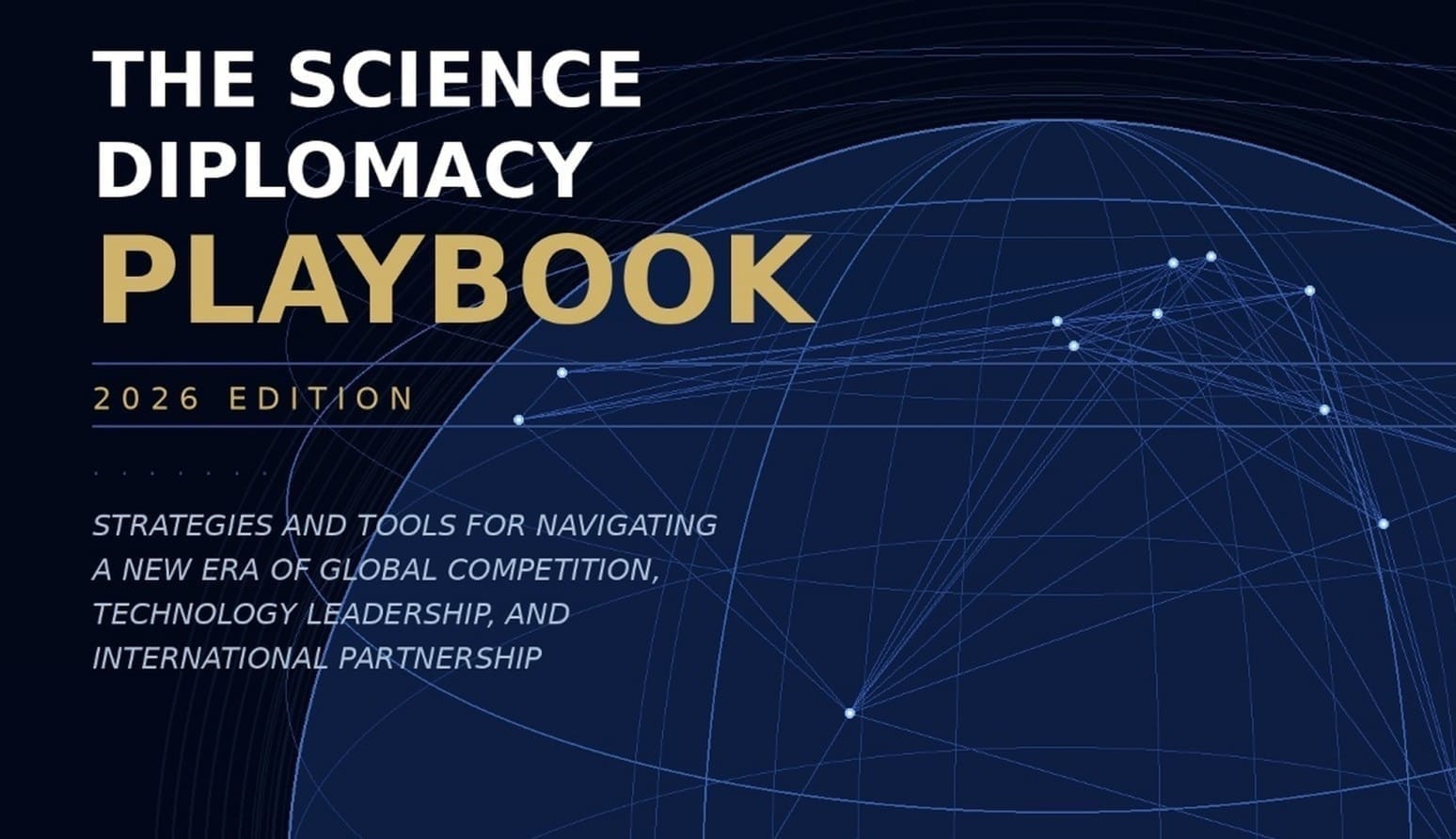
The guide expands on many of the themes covered in Global Signals, including AI governance, critical minerals diplomacy, bilateral science and technology agreements, minilateral coalitions, research security, and the growing role of science diplomacy in industrial strategy.
It is written as a practical field guide for decision makers navigating the intersection of science, technology, and global affairs.
Available as a paperback and kindle on Amazon, with ebook editions on Apple Books, Fable, and Everand. Library distribution rolling out across North America, the United Kingdom, and Europe through Tolino, Vivlio, Smashwords, Gardners, BorrowBox, and cloudLibrary.
Join Global Signals
A biweekly strategic brief and live briefing series translating science, technology, policy, and global capital flows into strategic insight for decision makers across diplomacy, investment, research, and innovation. Join here
🎧 Podcast: Don’t miss The Global Lens, Science Diplomacy in Focus, featuring global leaders at the intersection of science, diplomacy, and innovation.
Subscribe: Spotify | Apple | More platforms