Europe Is Building a Science Diplomacy Operating System
Universities are becoming Europe's front line of science diplomacy
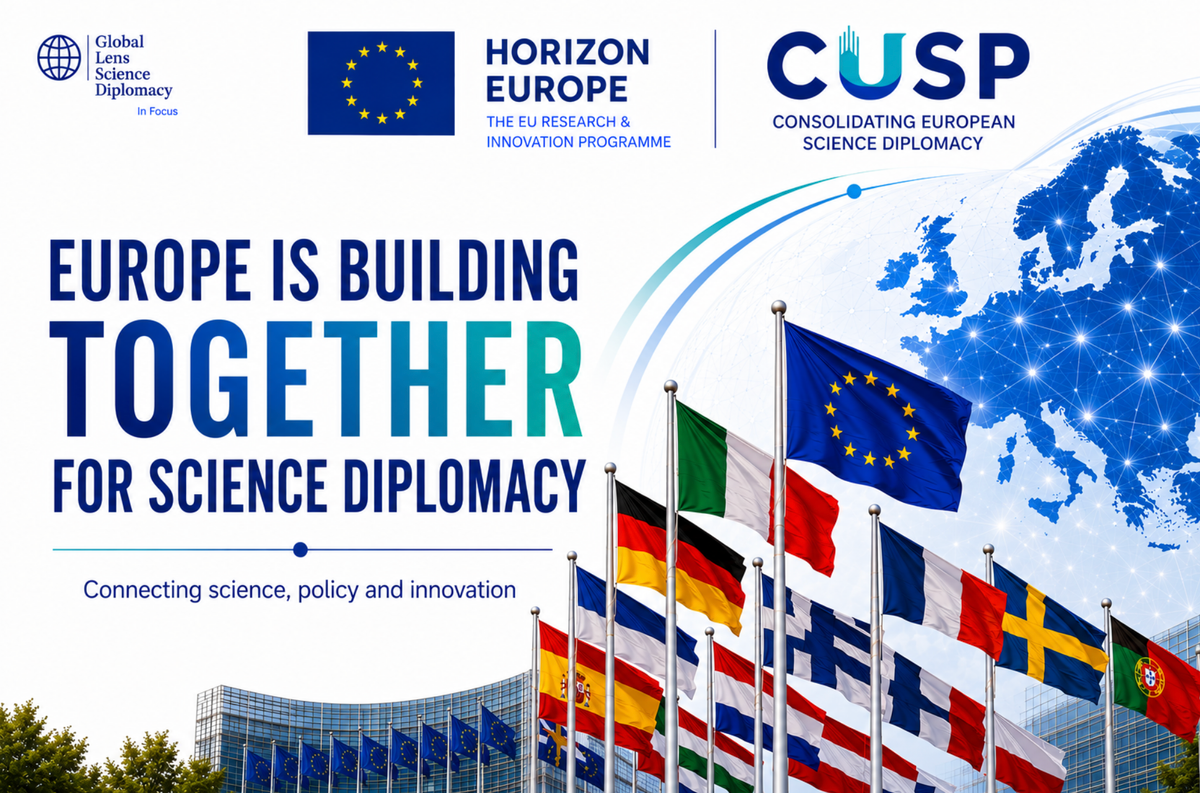
Europe is crossing an important threshold in science diplomacy. On 29 May 2026, the Council of the European Union adopted a recommendation outlining the EU's first framework for science diplomacy. Three days later, the Horizon Europe funded Consolidating European Science Diplomacy project, known as CUSP, officially began.
The sequence matters. Europe is moving from discussing science diplomacy to building the institutions, skills and networks required to use it strategically. And at the centre of that construction, often without full recognition, stand higher education institutions.
The EU framework establishes a shared vision for connecting science, research and innovation with European foreign policy. It identifies science diplomacy as a tool for strengthening Europe's global scientific position, supporting competitiveness, protecting democratic values and addressing shared challenges through open and secure international cooperation. It also places science diplomacy directly within debates about technological sovereignty, economic security, artificial intelligence, quantum technology, research integrity and the future of the rules based international order.
This is a significant change in direction. For many years, European science diplomacy developed through individual ministries, research institutions, universities and professional networks. Several countries established science advisers, technology ambassadors or dedicated science diplomacy units, but the overall landscape remained fragmented. The new framework is an attempt to create greater coherence without replacing national capabilities or institutional independence.
From a policy framework to an operating capability
CUSP is designed to turn the framework into practice. Coordinated by the Centre for Social Innovation in Vienna and anchored in the EU Science Diplomacy Alliance, the three year project brings together 11 organisations, including UNESCO, the German Aerospace Center, Charles University, Aarhus University, the National Research Council of Italy, the Marie Curie Alumni Association and the Centre for European Policy Studies.
Its work has three principal components. The project will map science diplomacy organisations, policies and initiatives through an AI assisted knowledge base. It will establish a central European Science Diplomacy Hub with ten thematic working groups and regional dialogues. It will also develop a competence framework, curricula and training for diplomats, researchers, science counsellors and policymakers.
The ambition is substantial: to transform a dispersed European community into a connected science diplomacy ecosystem. But the success of CUSP will not be determined by the number of reports, platforms or meetings it produces. Its real value will depend on whether it changes how foreign ministries use scientific advice, how universities approach international engagement, how diplomats understand emerging technologies and how governments coordinate research, economic and security priorities. Europe does not simply need another network. It needs an operating capability.
Universities are the front line
Science diplomacy is often discussed as the business of foreign ministries. In practice, most of it happens inside universities and research institutions. They hold the international research partnerships, host the student and researcher mobility, form the multinational consortia and carry the scientific credibility that governments draw upon when they engage abroad. When a country signs a research cooperation agreement, universities are the ones who deliver it.
Yet most national strategies still treat higher education institutions as beneficiaries of diplomacy rather than practitioners of it. Universities receive funding streams, mobility schemes and partnership frameworks designed elsewhere, while their own international engagement is managed as administration rather than strategy.
The new European architecture begins to change that. The competence framework, curricula and training developed under CUSP are aimed not only at diplomats but at researchers, science counsellors and institutional leaders. The thematic working groups and regional dialogues create channels through which universities can help set agendas rather than simply respond to them. The framework's insistence on combining openness with security places new responsibilities directly on institutions, because they are where sensitive research, foreign partnerships and talent flows actually meet.
The implication is clear. Universities are becoming strategic international actors, whether or not they have organised themselves to play that role.
When governance fails, diplomacy follows
Hungary illustrates what happens when the institutional foundation weakens. Science diplomacy begins with the quality and credibility of a country's domestic research system, and universities sit at its core.
In 2022, 34 Hungarian institutions, including 21 universities, lost access to certain Horizon Europe and Erasmus+ funding following European Commission concerns about academic freedom, transparency and the governance of public trust foundations controlling those institutions. The consequence was not confined to funding. An entire national research community was partially disconnected from European consortia, academic networks, student mobility and regional innovation systems, regardless of the intent of any ministry or embassy.
Hungary's new government has now begun restructuring that governance model. Legislative changes adopted in June 2026 created a transition process for affected institutions, although the pathway to restoring full Horizon Europe participation remains unfinished. The government has also outlined a broader research and innovation agenda, including a national science fund providing stable financing beyond annual budget cycles, stronger cooperation with the private sector, expanded entrepreneurship and innovation education, and an increase in research and development expenditure from approximately 1.3 percent of GDP to 2 percent by 2030, with a longer term ambition of reaching 3 percent.
The lesson extends well beyond one country. University governance is not an internal administrative matter. It is diplomatic infrastructure. When it loses credibility, a nation's science diplomacy capacity is weakened at the source, and restoring it requires transparent governance, academic independence, predictable funding and renewed confidence among research partners. That is science diplomacy in practice.
Horizon Europe is becoming an alliance architecture
The positive mirror image is visible in Horizon Europe's expanding membership. As of June 2026, 22 non EU countries were associated with the programme, including the United Kingdom, Canada, South Korea, New Zealand, Switzerland, Israel and Ukraine. Association negotiations have also been concluded with Japan and Australia, while the EU and India have explored a possible future association.
For the universities of associated countries, membership is a strategic multiplier. It provides access to funding and research networks, but also a seat inside the consortia, standards discussions and long term relationships that structure cooperation in health, climate, energy, space, digital technologies and advanced manufacturing. Horizon Europe is no longer only a European research funding programme. It is becoming an international platform through which countries coordinate scientific priorities and connect research communities, with universities as the operational nodes.
For Europe, these partnerships extend its scientific reach and strengthen its ability to shape the rules surrounding emerging technologies.
Openness will increasingly come with safeguards
The new European approach does not advocate unrestricted scientific openness. It promotes cooperation that is both open and secure, and the weight of that balance falls largely on institutions.
The European Commission's Research Security Monitor found growing awareness of risks related to international research cooperation, while also noting that the maturity of national research security policies continues to vary across member states. These risks include the unwanted transfer of critical knowledge, foreign interference, misuse of research and violations of research ethics or integrity. Universities and allied research organisations should therefore expect more attention to reciprocity, trusted partnerships, due diligence and safeguards in sensitive fields.
The central challenge will be proportionality. Security measures that are too weak may expose critical technologies and research institutions. Measures that are too broad may discourage international cooperation, restrict talent mobility and undermine the openness that makes scientific progress possible. Navigating that boundary will be a defining institutional competence of the coming decade.
What this demands of university leadership
For rectors, vice chancellors, provosts and international offices, the message from Brussels is an invitation to a larger role, and it carries obligations.
It means treating international engagement as strategy rather than administration, with partnerships assessed for their diplomatic and geopolitical significance, not only their research output. It means building genuine research security capacity, including due diligence, risk assessment and clear internal governance for sensitive collaborations. It means participating actively in the new architecture, from CUSP working groups to regional dialogues, so that institutional perspectives inform the competence frameworks and training now being designed. And it means investing in people, because the science diplomacy skills the framework calls for will live in individuals: researchers who understand policy, administrators who understand geopolitics and leaders who can represent their institutions in diplomatic settings.
Universities that organise for this role will help set the terms of European science diplomacy. Those that do not will find the terms set for them.
The next phase
Europe now has a framework, an implementation project and an expanding network of international research partners. The next phase will be harder. Success will depend on whether member states coordinate across ministries, whether diplomatic services build scientific capability, whether universities step into their role as strategic international actors and whether research security remains compatible with meaningful openness.
Hungary shows the cost when institutional credibility breaks down. CUSP provides a mechanism for connecting the European community. Horizon Europe provides the architecture for engaging allies and partners.
Together, they reveal a deeper change under way. Science diplomacy is becoming part of Europe's strategic infrastructure, and higher education institutions are becoming its front line. The credibility of that infrastructure will ultimately be measured by Europe's ability to convert scientific strength into trusted partnerships, informed policy and practical cooperation, while preserving the openness, independence and integrity on which science depends.
Join Global Signals
A biweekly strategic brief and live briefing series translating science, technology, policy, and global capital flows into strategic insight for decision makers across diplomacy, investment, research, and innovation. Join here.