Rare Earths, High Technology Stakes: Innovation, Strategic Partnerships, and the Race for Critical Minerals
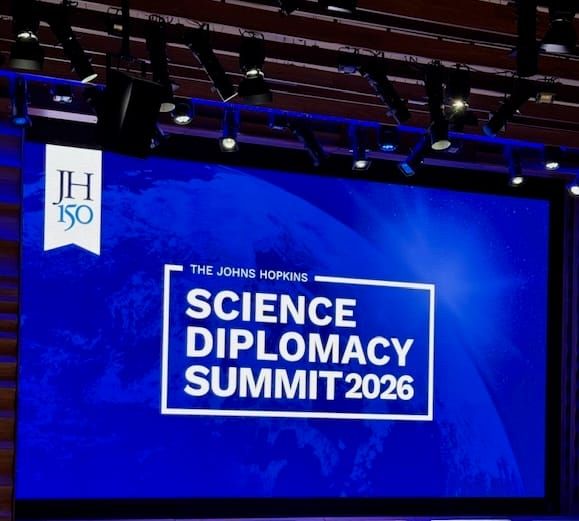
At the Johns Hopkins Science Diplomacy Summit 2026, a panel on rare earths and critical minerals made one point especially clear: supply chains are no longer simply commercial systems. They are increasingly instruments of strategic leverage, industrial resilience, and geopolitical competition.

The session brought together Mahlet Mesfin of the Stimson Center, Barbara Humpton, CEO of USA Rare Earth, and Corey Combs, Head of Climate, Energy and Supply Chain Research at Trivium China. What emerged was not only a more nuanced understanding of rare earths themselves, but a sharper view of how science diplomacy is evolving in response to material dependencies shaping energy systems, defense readiness, advanced manufacturing, and technological competition.
Rare earths are often discussed as a single category, but the distinction between light and heavy rare earths matters. Light rare earths are more abundant and found in many parts of the world. Heavy rare earths are less common and more strategically sensitive because of their role in high-performance magnets and advanced applications. Yet even this distinction captures only part of the challenge. The deeper issue is industrial capability, as the concentration of power lies in processing, separation, metal making, and magnet production, where expertise, infrastructure, and scale remain highly concentrated.
Supply chains are now shifting from logistical systems to strategic ones. For decades, they were designed for efficiency, with cost optimization and geographic specialization defining how production systems evolved under an assumption of stability. What is changing now is that supply chains are increasingly shaped by geopolitical risk, national security priorities, and strategic competition.

As Corey Combs highlighted, even relatively targeted policy shifts can have outsized systemic effects. U.S. export controls and broader technology restrictions, while focused on specific sectors, are interpreted by China within a much wider strategic frame. In response, China has increasingly used its position in critical minerals and processing capacity as counter-leverage, illustrating how actions in one domain can cascade across entire systems. What appears as a policy adjustment on one side is often read as a structural signal on the other.
This dynamic reinforces a key reality: supply chains are no longer neutral, but embedded in a feedback loop of action and response where policy decisions reshape market behavior and market concentration becomes a strategic instrument.
Rare earths sit at the center of this transition, embedded in defense systems, energy infrastructure, electric vehicles, medical technologies, and advanced computing, with their importance extending across sectors that are themselves becoming foundational to national power. As a result, access to these materials and the ability to process them has become as much a question of resilience as of efficiency.
This shift introduces a new tension, as resilient systems are not always the most cost-effective in the short term, while fragile systems carry long-term strategic risk.

Barbara Humpton framed this tension clearly, noting that a fully healthy market is not defined solely by lowest cost or maximum efficiency, but by its ability to balance competitiveness with resilience, diversity of supply, and long-term stability. Over-concentration, even when efficient, creates fragility, and in strategic sectors that fragility becomes a liability.
In this context, the role of government is not to replace markets, but to reshape the conditions under which markets operate. Public investment, policy alignment, and strategic coordination are increasingly used to accelerate capabilities that private markets alone have not developed at the necessary speed or scale. The discussion highlighted how U.S. efforts to expand domestic rare earth capacity are being structured through coordinated public and private investment, reflecting a broader move toward co-development models aligned with national priorities.
Barbara Humpton offered a clear example of how this is already taking shape. USA Rare Earth’s approach includes engagement beyond the United States, including capabilities linked to the United Kingdom through the acquisition of Less Common Metals, one of the few scaled rare earth metal producers outside China, as well as collaboration in France through investment in Carester to expand heavy rare earth processing capacity. These efforts reflect a broader strategy of building a distributed but aligned ecosystem across trusted partners, not simply diversification but system design.
At the same time, rebuilding capability is not only about infrastructure, but also about people. One of the less visible but critical challenges highlighted during the discussion is workforce development, as many of the capabilities required in rare earth processing and magnet production depend on highly specialized, experience-based knowledge that has eroded outside China over time. Rebuilding that capacity requires apprenticeship models, technical training, and long-term investment in human capital alongside physical infrastructure.
These developments point to a broader shift in how partnerships function. Whether through joint ventures, shared processing capabilities, or cross-border investment in key facilities, the emerging model is not one of complete independence, but of interdependence built on trust and alignment, representing a shift in how countries approach both industrial policy and international collaboration.
This is also where science diplomacy is evolving. The coordination required to build resilient supply chains now extends across research institutions, national laboratories, private industry, and governments, involving not only scientific collaboration but also shared standards, regulatory alignment, investment frameworks, and long-term strategic planning. Critical minerals, in this sense, sit at the intersection of discovery, production, and statecraft, functioning not only as inputs but as infrastructure.
What became clear from the discussion is that the value in this system is not confined to extraction. Much of the strategic and economic value is concentrated in the middle and downstream stages of the supply chain, particularly in processing and manufacturing, where specialized knowledge, skilled workforces, and sustained investment are required and remain difficult to replicate quickly.
Rebuilding these capabilities is therefore not only a technical challenge, but an institutional one. It requires aligning education, workforce development, industrial policy, and international partnerships in ways that support long-term capacity, while also recognizing that innovation in this space extends beyond frontier technologies to include process engineering, materials handling, recycling systems, and the practical knowledge that enables scaling.
The broader implication is that critical minerals are becoming part of the architecture of strategic competition. China’s position in rare earth processing and supply chains reflects how sustained industrial policy can translate into geopolitical leverage, while efforts in the United States and among its partners to diversify and rebuild capacity signal a growing recognition that resilience must be actively constructed.
The outcome of this effort will not be determined by a single breakthrough or policy decision, but by how effectively countries align their industrial capabilities, partnerships, and long-term strategies. What this panel ultimately underscored is that rare earths are no longer a background issue, but a defining element of how power is organized in a technologically driven world.
For those working in science diplomacy, this shift is significant. The focus is no longer only on collaboration in research, but increasingly on how nations coordinate the systems that connect research, industry, and security. The question ahead is not only whether supply chains can be diversified, but whether they can be rebuilt in a way that supports resilience, innovation, and strategic alignment at the same time.
Join Global Signals
A bi-weekly strategic brief and live briefing series translating science, technology, policy, and global capital flows into decision-grade insight for diplomats, investors, researchers, and innovation leaders. Join here
🎧 Podcast: Don’t miss The Global Lens, Science Diplomacy in Focus, featuring global leaders at the intersection of science, diplomacy, and innovation.
Subscribe: Spotify | Apple | More platforms
More analysis on science diplomacy and strategic infrastructure is available at glsd.ai, where ongoing work connects policy, innovation, and international partnerships through a global lens.